
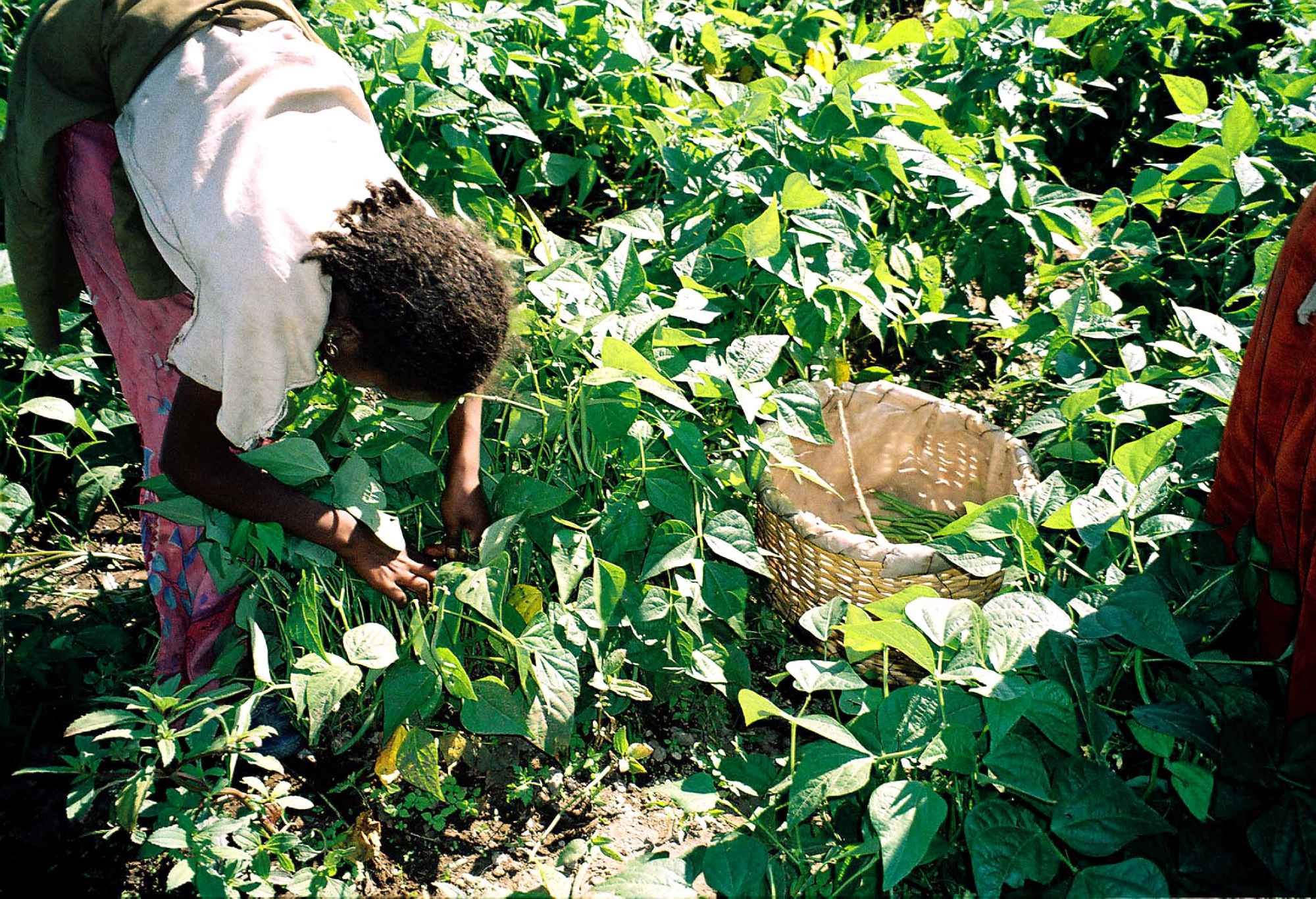
Harvesting time of green bush beans and crop losses
Green bush beans have a very narrow window in when they can be harvested. Consider them like ripening pears in a fruit basket. One day too late and they are mushy. Ok, bush beans are not that bad, but very close. Your harvesting window is usually within two weeks at most. Considering all the planning that needs to be done before harvesting you don’t have lots of time. Understanding the time limits will increase the percentage harvested yield that is actually sold. Thus making the farm more productive and effective (Morgan & Larson, 2011)1.
Getting the harvest time wrong will result in either physical, quality and nutritional loss and eventually economic loss for the grower (FAO, 2019, p. 5)2. If you are growing runner beans it is a continuous process and each pod can be ‘evaluated’ if it is ready. Again you don’t have much leeway between too early and too late. Picking has to be on the right time for best prices and shelf life. It is estimated that the best time to pick is when the pods have 10% dry matter content (FERREIRA, et al. 2006)3. But most varieties have a certain length that is optimum for its specific growth style and the beans should be harvested at that point. The best way is to take sample lengths 3 days prior(BRENDLER, 1969)4 to harvesting and 3 days after (just to confirm pod length creteria for future reference). There have been attempts to determine the optimum colour of beans at harvest time, but that has little scope as colour will also be determined by soil type, fertilizers (total and combination), light intensity, irrigation and variety.
Since bush beans are uprooted when harvested manually, production losses are usually found right thereafter. If the uprooted plants are left in the field too long, dry hot weather will reduce the moisture content of the beans very quickly causing the pods to pop open, making them unmarketable. Leaving the crop in rainy weather causes severe rotting of the pods. Labour can also cause damage to the harvested crop long before it reaches the customer. Lack of labour reduces harvesting efficiency, resulting in crop damage. The distance from the farm to sorting and packaging facility plays a large roll in what condition the end user sees the product. It is estimated that 50% of the harvested crop is lost right up to the consumer.
The problem is not always the process of harvesting, the greatest losses are found at post harvest handling, storage and transport and eventually the consumer(STRECKER, et al. 2022)5. Although consumer handling and storage is not the growers problem, it is important for food security in marginalized countries and agricultural policies should include communication to all stakeholders.
References
- Morgan, N., & Larson, G. (2011). Missing food: the case of posthar-vest grain losses in Sub-Saharan Africa. Agricultural and Rural Development Notes No. 56. Washington, DC: World Bank Group.
- FAO. (2019). The State of Food and Agriculture 2019: Moving For-ward on Food Loss and Waste Reduction. Rome, Italy: Food andAgriculture Organization of the United Nations FAO).
- Ferreira, M.E., De Varennes, A., de Melo-Abreu, J.P. and Vieira, M.I., 2006. Predicting pod quality of green beans for processing. Scientia horticulturae, 109(3), pp.207-211.
- Brendler, R., 1969. Bush snap beans… varietal evaluations and timing for mechanical harvest. Hilgardia, 23(6), pp.16-17.
- Strecker, K., Bitzer, V. & Kruijssen, F. Critical stages for post-harvest losses and nutrition outcomes in the value chains of bush beans and nightshade in Uganda. Food Sec. 14, 411–426 (2022). https://doi.org/10.1007/s12571-021-01244-x.
Share This Story, Choose Your Platform!
About the Author: Antonius

Related Posts


Recent Posts
Keyword Index

Small 10L under counter geyser for basins