
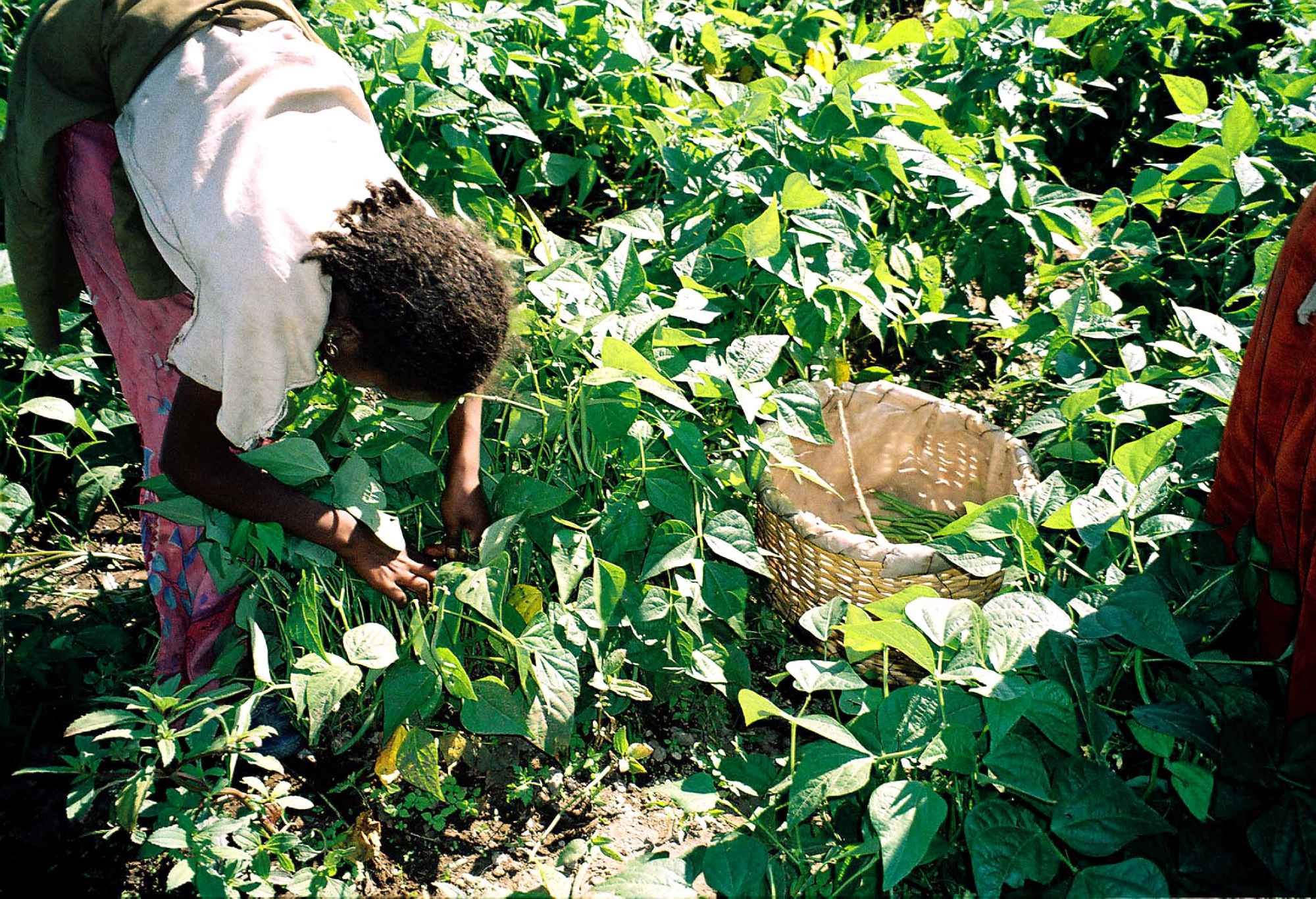
Green bush beans have a very narrow window in when they can be harvested. Consider them like ripening pears in a fruit basket. One day too late and they are mushy. Ok, bush beans are not that bad, but very close. Your harvesting window is usually within two weeks at most. Considering all the [...]
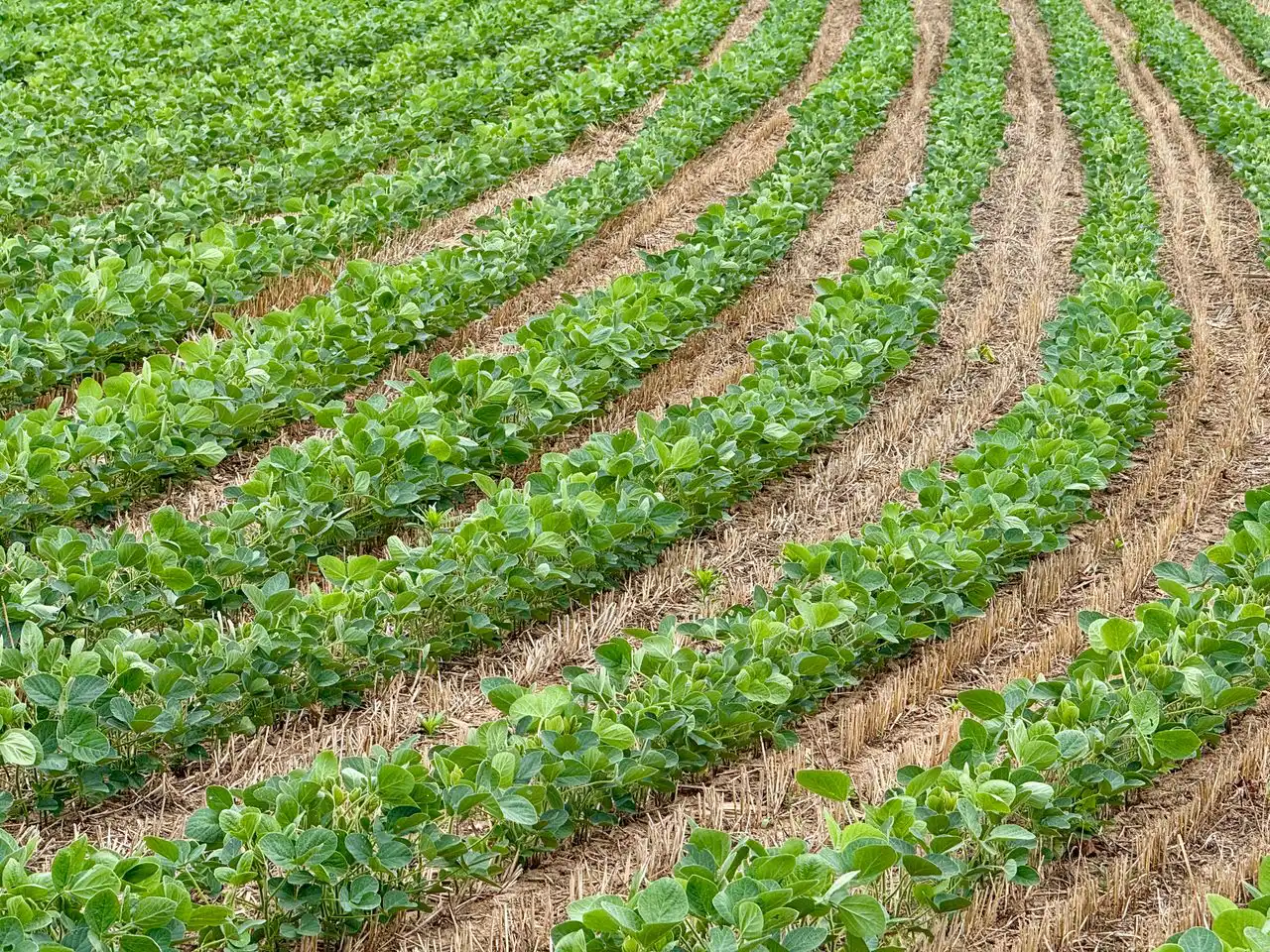
It is possible to grow a healthy crop purely by adding enough compost to the soil. Gardeners and small scale farmers do it every day. But, it is not viable as a large commercial grower. Just to maintain the carbon to nitrogen ratio (C/N) in the soil will take at least 30t/ha organic material, and [...]
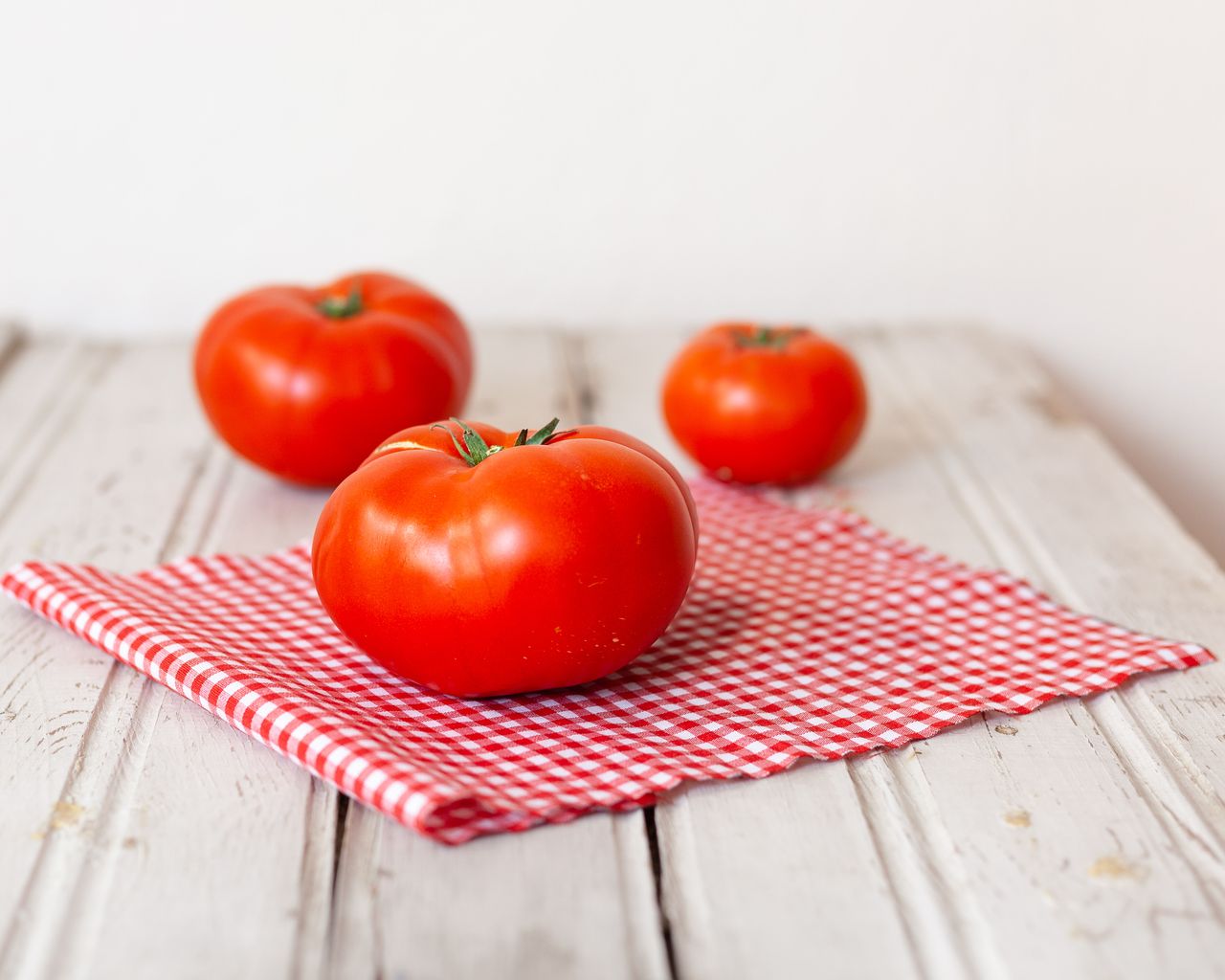
Tomatoes are among the easiest fresh produce crops to sell. Whether you're supplying a supermarket, a roadside stall, a farmers' market, or an informal market, there's almost always demand for good tomatoes. That steady demand is one reason the crop remains so popular with commercial growers. The sensory attributes of tomatoes such as flavor, sugar-acid [...]
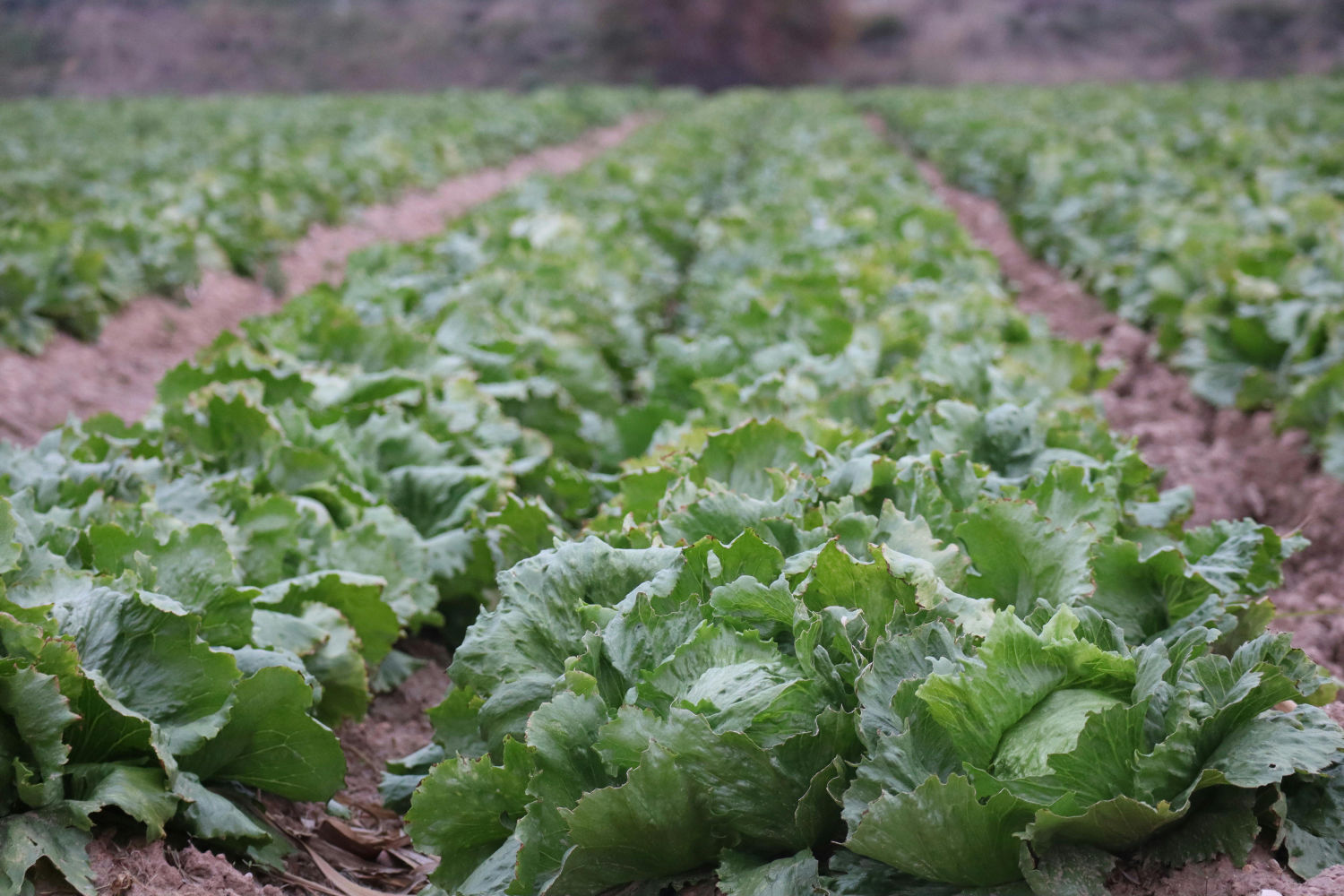
Lettuce fertilizer requirements can be calculated if you know your soil type and have a good idea of the yield potential of your land and climate. So these tables are not really suitable if you have no experience in lettuce or you have not done a soil analysis. These are basic norms and your specific [...]
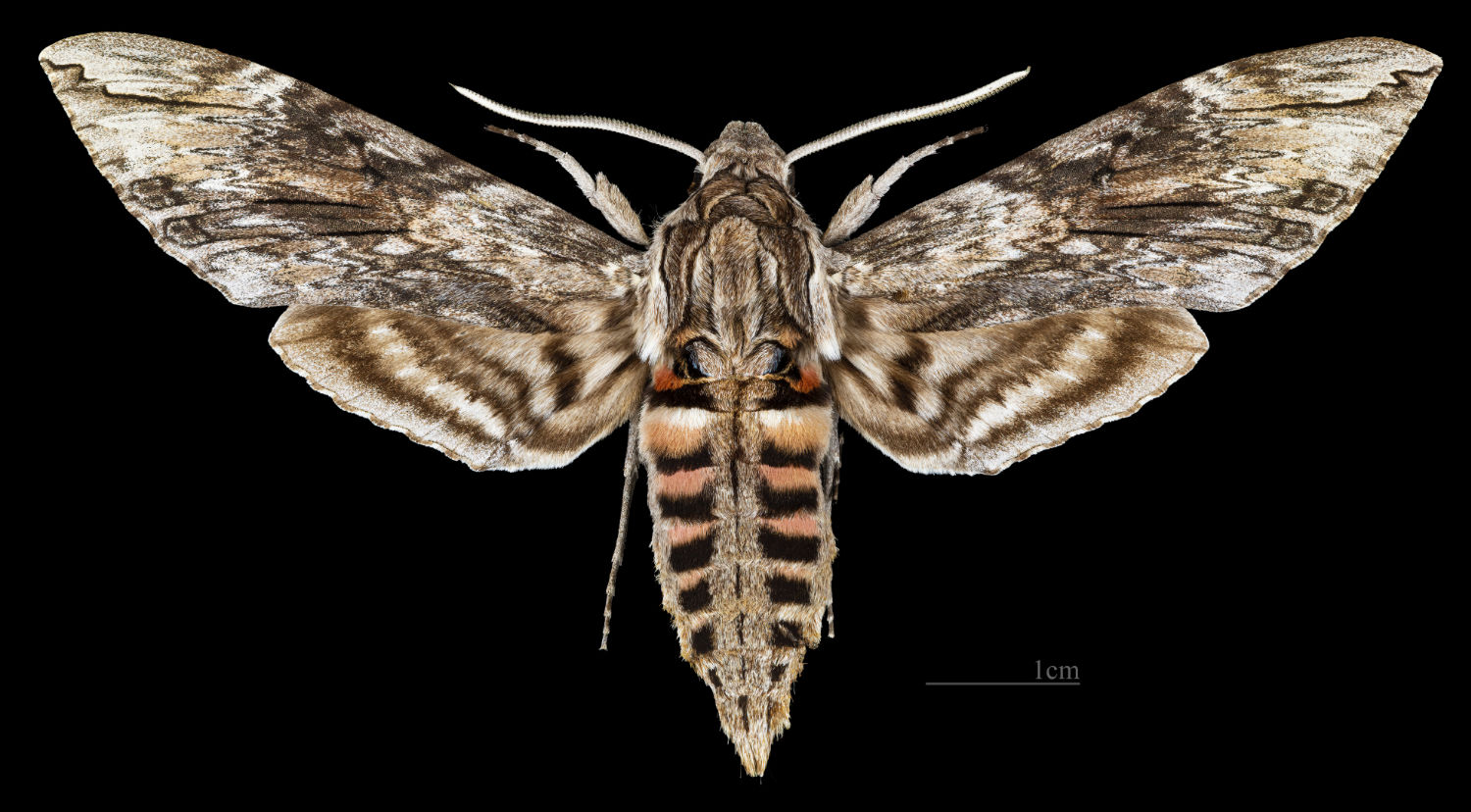
Agrius convolvuli is commonly known as the sweet potato hawkmoth or hornworm. Hawkmoths are big, with wing spans between 80–105 mm, grey to black with pink abdominal segments. Sweet potato weevil is the most destructive of all sweet potato pests as it destroys stems, leaves and fruit from the field to stored produce Kibrom Beyene. [...]

Comfrey is classified as an herb. It stands out from all other herbs that its leaves has the highest concentration of protein of all vegetables. High concentration of calcium (Ca), potassium (K), vit A, C and very importantly Vit B12. It has a significant tap root that can reach 3m in deep soils from which [...]

There exists a misconception surrounding phytoestrogens, suggesting that they may have adverse effects on humans, particularly in men. Nevertheless, it is important to clarify that certain plant compounds, known as phytoestrogens, can have a positive impact on human health. These naturally occurring compounds bear a structural resemblance to the hormone estrogen and can engage with [...]

Commercial processing carrots are grown specifically for processing into products such as juice, baby food, and frozen or canned carrots. They are usually larger, thicker, and less uniform in shape than fresh bunching carrots. They are also harvested at a mature stage when they have higher sugar content. Fresh bunching carrots, on the other hand, [...]

The world's consumption of chickpeas has increased significantly in recent years. Garbanzo beans sometimes referred to as chickpeas, are a wholesome and adaptable legume that is frequently used in a variety of international dishes. A variety of reasons have contributed to the increase in chickpea consumption. Animal based protein is getting more expensive so there [...]

If you find that the burning effect of capsaicin is too intense, there are several things you can do to reduce it: Drink milk or eat dairy products: Capsaicin is soluble in fats, so drinking milk or eating dairy products can help to neutralize the heat. Dairy products can help to coat your mouth and [...]

The burn sensation you feel on your tongue from hot peppers is caused by a group of compounds called capsaicinoids. Capsaicinoids are responsible for the heat and pungency of hot peppers, and they interact with the pain receptors on your tongue and other tissues, creating a burning sensation. Capsaicinoids are found primarily in the seeds [...]

The terms "chilies" and "peppers" are often used interchangeably, but they can refer to different things depending on the context. In a culinary sense, "chilies" typically refers to the spicy or hot fruits of the capsicum family of plants, which are used to add flavor and heat to a variety of dishes. These fruits are [...]

The hottest jalapeno pepper that can be grown is the "Bhut Jolokia" (Capsicum frutescens) or "Ghost Chili Pepper," (Capsicum chinense) which is considered one of the spiciest peppers in the world. It has a Scoville heat rating of over 1 million units, which is significantly hotter than a regular jalapeno, which has a heat rating [...]

Hardening of seedlings may sound cruel but it results in stronger healthier plants with higher yields. Hardened off plants are thicker, less succulent and more resistant to transplant damage and stress than non-hardened seedlings. Hardened off plants need less attention in the field resulting in more energy spent on other aspects of farming. Hardening off [...]
Blosyrus inaequalis is mostly found in Siri-Lanka and India, but lately also in the northern parts of South Africa. So far the economical damage cause in the highveld in South Africa is not a big concern, but in the lowveld it can cause problems. Folded leaf edges with 15-25 eggs is a sign of Blosyrus [...]

Sweet potato weevil can be devastating in Africa. losses between 73%N.E.J.M.Smit,"The effect of the indigenous cultural practices of in-ground storage and piecemeal harvesting of sweetpotato on yield and quality losses caused by sweetpotato weevil in Uganda," Agriculture, Ecosystems and Environment,vol.64,no. 3, pp. 191–200, 1997. -100%K. O. Fuglie, “Priorities for sweetpotato research in developing countries: results [...]

Planting material Sweet potatoes are propagated vegetatively through vines (or runners) which are cut up in cuttings, each 300-400mm long. Most other crops are propagated with seed, which comes from the reproductive parts of the plant. Selecting disease and insect free material from a reputable supplier is the first cheap step in reducing spray cost [...]

Butternut (Cucurbita moschata) fertilizer requirements can be calculated if you know your soil type and have a good idea of the yield potential of your land and climate. These are basic norms and your specific microclimate and variety can have an influence on the total amount applied. These norms do not take top dressings into [...]

Sweet potato soil requirements are similar to many other vegetable crops. Good high quality soil is the first step towards good yields, it is not a guarantee, but it helps. The soil texture, structure and chemical composition significantly influences root growth, which is where the tubers grow. Any part of the soil that restricts root [...]

Basil is native of tropical Asia, where for centuries, especially in India, it has been highly esteemed as a condiment. The early Greek and Roman writers were well-acquainted basil. England used basil as early as 1538 and by 1586 it was a well-known herb. The Americans started using it about 100 years ago. It is [...]

The sweet potato is an underrated popular vegetable in South Africa. Since it is a tropical crop, it cannot be grown everywhere. Interestingly, it is also popular in India, China and Japan. In southern America, its popularity supersedes that of the potato. There they refer to the sweet potato as the "potato" and the potato [...]

Sweet potato fertilizer requirements can be calculated if you know your soil type and have a good idea of the yield potential of your land and climate. These are basic norms and your specific microclimate and variety can have an influence on the total amount applied. These norms do not take top dressings into account, [...]

Climate requirements of carrots Carrots is a cold weather crop. The ideal growing season is from early autumn to late spring. Carrots can be grown throughout the year if summers are not too hot like the lowveld in South Africa. Although heavy frost damage leaves, it does not affect the root, so the carrot itself [...]

Carrot fertilizer requirements can be calculated if you know your soil type and have a good idea of the yield potential of your land and climate. These are basic norms and your specific microclimate and variety can have an influence on the total amount applied. These norms do not take top dressings into account, only [...]

Pea fertilizer (Pisum sativum) requirements can be calculated if you know your soil type and have a good idea of the yield potential of your land and climate. These are basic norms and your specific microclimate and variety can have an influence on the total amount applied. These norms do not take top dressings into [...]

Beetroot fertilizer requirements can be calculated if you know your soil type and have a good idea of the yield potential of your land and climate. These are basic norms and your specific microclimate and variety can have an influence on the total amount applied. These norms do not take top dressings into account, only [...]

The most well known beetroot varieties or cultivars are discussed here. When starting it is advisable to use at least 2-3 different varieties in a test field to assess which variety suits your growing conditions the best. Always keep on doing trials. Don't plant a variety just in one time of the year. Your climate might be more moderate than you think.

Harvesting beetroot Beetroots is harvested in phases. Initially when the bulbs are 25-40mm in diameter. Size will vary according to variety planted and time of season. This is the first harvest and is merely a thinning out process. The second and final harvest is when the bulbs are 50-75mm in diameter. Days to harvest is [...]

Beetroot mechanical weed control Weeds are controlled either by hand or chemically. Since beetroot seed is actually a small fruit with 2-6 seeds inside, the bunches of seedlings are thinned out so that only one seedling is left and at least 75mm apart. One of the biggest problems with weeds is that they compete with [...]

It has already been mentioned in previous articles that the soil must be kept moist until the seedlings emerge. Light regular water applications must be applied from sowing until the seedlings emerge. heavy irrigation will make herbicides less effective. Beetroots grown during alternating dry and wet periods have poor quality and poor emergence. The beets [...]

Sowing beetroot is a practice used by commercial farmers. They are not planted with seedlings. Once the seed is cleaned and salts removed they are ready for sowing. In most cases a seed planter is used since commercial growers can plant 50 ha or more, especially for the canning industry. Very little beetroot is sown [...]

BeetrootBy Downtowngal [CC BY-SA 3.0 (https://creativecommons.org/licenses/by-sa/3.0)], from Wikimedia Commons seed treatment is mostly done by commercial seed companies. There are instances where local seed can be harvested. In this case it is important to understand why it must be washed so that low stands can be avoided. Beetroot seed appears corky and fairly big [...]

Pigeon pea climatic requirements The pigeon pea is susceptible to frost damage at all stages of growth.. The most favourable temperature range is between 18-29°C (64-85°F). For best seed yields bright sunshine is essential. excessive cloud or shade produces spindly growth and poor seed set. There are short day, day neutral and intermediate varieties in [...]
-
Beetroot is not grown by many farmers. Mainly because the demand is not that great and commercial companies have the market share. A large portion of the beetroot sold is processed and bottled. A small portion is sold as fresh. This does not mean there are not opportunities. The advantage of growing beetroot is that [...]

Okra is not well known in South Africa. Actually its not very well known except maybe in Turkey, India and Asian countries (but they use a different variety). Okra has various popular names such as Gumbo and Lady's Finger. Chinese Okra is something totally different, Luffa acutangula, family Cucurbitaceae. The Okra we are talking about is from [...]

Nutritional value of pigeon peas can vary considerably, as with any crop. Climate, growth stage, plant part, fertilizer application are but a few variables that can affect the nutrient content of a pigeon pea analysis. The table below should just be used as a general guideline. The total protein, fat and fibre content are high [...]

Tomato fertilizer requirements can be calculated if you know your soil type and have a good idea of the yield potential of your land and climate. These are basic norms and your specific microclimate and variety can have an influence on the total amount applied. These norms do not take top dressings into account, only [...]

Green pea soil preparation Achieving good yields green pea soil preparation is the first step for any grower. The soil must be well drained as green peas are very sensitive to waterlogged conditions. Make sure that the water table of the underground water is not closer to the surface than 800 mm. As with any [...]

Chillies are just as susceptible to the know viruses as tomatoes. The most common known virus is tobacco mosaic virus, tomato spotted wilt virus and potato virus group X and group Y. You cannot control or spray for a virus. There are no chemicals that can kill viruses on a large scale as required on [...]
-
Pigeon pea growth period and harvesting The growth period of the pigeon pea varies considerably. Depending on variety pigeon peas will grow 100-300 days. Location, thus local micro climate and sowing date have a significant influence on growth season length. In India most late-maturing varieties take about 240-280 days to produce a seed crop and [...]

Pigeon peasFeatured image: Steve Hurst, USDA-NRCS PLANTS Database. Pigeon pea (Cajanus cajan) seeds. Wikimedia Commons or Cajanus Cajan is an alternative crop to the current line of commercial available crops. The big advantage is that it can become a major part of peoples diet, unlike many other commercial crops such as lettuce, chillies and [...]

Planting pigeon peas is easy as they are strong growers. If they receive enough water and nutrients, the crop will grow. Make sure you use healthy seed and that they are inoculated with Rhizobium strains that are tested. Inoculated seed will provide higher yieldsFeatured image from Wikipedia. https://en.wikipedia.org/w/index.php?title=File%3ACajanus_cajan.jpg . Planting pigeon peas Pigeon peas are [...]

Green bean fertilizer requirements can be calculated if you know your soil type and have a good idea of the yield potential of your land and climate. These are basic norms and your specific microclimate and variety can have an influence on the total amount applied. These norms do not take top dressings into account, [...]

Pest and diseases of pigeon peas Pests The biggest threat to pigeon peas are gram caterpillar, the red gram plume moth and the gram pod fly. There are no effective control methods against these pests. Thrips cause premature flower drop but there are chemicals that can control them. The caterpillar of the spotted borer can [...]

Chilli insect control is very similar to tomatoes, peppers and potatoes as they are all from the same family of plants. You could say they are all cousins to each other. All these plants belong to the genus Capsicum or Solanaceae families. If you have grown tomatoes or green peppers before, be prepared to have the [...]

Chillies diseases and their control Chillies diseases are the same as those found on tomatoes, peppers and brinjals. The reason is that they are all from the same family of crops. Most small scale farmers do not have the necessary industrial spray equipment to control chilli diseases effectively but that is no reason that hand [...]

Inoculant is used to help various legumes produce their own nitrogen. The pea is a legume and can use the nitrogen released in the root nodules by the nitrogen fixing bacteria. Inoculate pea seed if it is the first time planting on a specific soil. Inoculate the seed if the soil has not been planted [...]
-
Climatic requirements for green peas Green peas are grown mostly by large scale contract farmers that sell the product to processors. The green pea Pisum sativum is a very well known and economically important vegetable crop in South Africa. The total area under production is about 10,000 ha. Most of the area is produced for freezing [...]

Harvesting dried hot chillies is different from harvesting normal ripe hot chillies. Harvest dried hot chillies after the plants have died of frost. The best time to harvest is in winter. Yes you grow them in summer. But harvest in winter. A grower harvests normal peppers or fresh chillies in late summer or at the [...]

Chillies are from the same family as tomatoes, and green peppers. So the climatic requirements are similar. They are part of the scientific group called Capsicum frutescens L. The common pepper or green pepper is from the family Capsicum Annuum L. So you can see they are very closely related. One of the main advantages [...]

Irrigation of green beans is crucial as the plants are made of soft tissue. Green beans can easily wilt to such an extent that yield losses are significant. So the successful cultivation of green beans depends on enough water throughout the growth season. In harsh climates such as in South Africa, successful green bean production [...]

Green bean soil cultivation for commercial small scale farmers Green bean soil cultivation for commercial small scale farmers is also applied in large commercial farms. In a well prepared loose soil, bean roots can penetrate to a depth of 1200 mm. The effective root depth is 450 - 500 mm. Superficial green bean cultivation will limit [...]

Inoculation of bean seed with nodule bacteria helps the plant to acquire its own nitrogen. Not recommended as a standard practice on green beans. Using nodule bacteria is tricky since there are so many different types. One of the biggest obstacles are inoculating the plant roots with the same strain of bacteria that are in [...]

Green beans are attached by various pests and because effective pest control is such an important aspect of green bean production, the bean pests must be identified before the correct control measures can be applied. The safe period applicable to a specific pesticide is very important. This period allows the chemical to bio-degrade and makes [...]
-
Green bean micronutrients or trace elements are often a forgotten aspect, not just in green beans but in general vegetable farming. Micronutrient deficiencies are rare in green beans but there are some soils where symptoms can occur. What growers forget is that a very small amount can have a devastating effect on yields. That is [...]

Green bean planting times are crucial since they are sensitive to frost They can be cultivated only when there is no longer any danger or risk of frost. The different planting times for bush and runner beans in various parts of South Africa are listed in the table below Green beans planted during early summer [...]

Lettuce pests can be controlled in large commercial plantings. Due to the high planting densities and large fields, scouting is often neglected. Most pests are found near a specific location or concentrated in an area close to either other crops or forests. If these areas are sprayed first and regularly the spread of pests deeper [...]

According to botanists the current variety, Lactuca sativa, was developed from Lactuca scariola, which is a common weed in Europe, Abyssinia, East Asia and the USA. Lettuce is very important in a diet because of its high-quality content of Vitamin A and C. There are three basic commercial types: Curly leaf or cos lettuce Butter [...]

Pumpkins and squashes belong to the family cucurbitaceae and are related to calabashes, watermelons and muskmelons. Pumpkins and squashes probably originated in America from where they spread to Europe and other parts of the world. Pumpkins were introduced to South Africa when the first Europeans arrived and they imported the seed from Brazil. An interested [...]

Green bean seed germination is epigeal. that is the cotyledon is pushed above the soil surface together with the young leaves. From planting it takes about 6-10 days for the seedlings to appear, depending on the soil temperature. At an optimum soil temperature of 24-30°C the seed will germinate rapidly and the seedlings emerge after [...]

The basics of green bean fertilization Green bean fertilization is quite easy as it has a short growth season, but if neglected can have a significant effect on yields. Proper preparation of the soil and an adequate amount of well-balanced nutrients are essential for good yields and a large proportion of first grade pods. The nutrients [...]

Maximising farm profit starts with a lot of things and one of the is the right variety for the production system. The right variety will provide the grower with the right product for his market and climate. The most important is climate. If the variety is adapted to the farm climate, a higher portion of [...]

There are 20 herbicides registered for controlling weeds in Phaseolus vulgaris. These are registered for Dry Beans, however, they should be applicable to green beans as well. These herbicides differ with regard to stage and method of application and the spectrum of weeds they control. These herbicides in combination with each other, or in certain cases [...]

We know that the quality of irrigation water is slowly deteriorating in South Africa. The salt content of water is ever increasing due to uncontrolled mining activities, heavy industrial effluent being dumped into rivers and intensive agricultural practices. At the end, the grower is becomes limited in what can commercially be grown (and I mean with making [...]

Important green bean bacterial diseases and their control Here is a warning to all prospective growers; green beans are quite susceptible to diseases. Just like other fast growing soft leaf vegetables, you have to be on your toes and look at warning signs. Although preventative sprays is the easiest way out it is more expensive. [...]
Virus diseases of green beans Virus diseases of green beans is a problem in the open field. As viruses cannot move by themselves, they need a host or vector to hitch a ride. Two main methods of transportation or distribution are insects and humans. Insects are the most difficult to control and are also the [...]

Fungal diseases of green beans Damping off Damping off is caused by various fungi. The most common fungi that show symptoms of damping off are Rhizoctonia root rot (Rhizoctonia solani), Pythium Root Rot (Pythium spp.), Phytophthora root rot (Phytophthora spp.) and Black root rot (Thielaviopsis basicola). The first symptoms are a weak stand. It is a soil borne fungi [...]

On commercial farms the most common method of planting is with precision planters. These planters can be set according to the size of the bean and the planting density required in the field. The most uniform yields are achieved this way compared to hand planting. As soon as the bean seed is planted overhead irrigation [...]

Green beans, or scientifically known as Phaseolus vulgaris L. is part of the family known as Fabaceae (Leguminosae) or legumes. Green beans can be grouped with potatoes, tomatoes, cabbage and onions in terms of their importance in human nutrition. It is not a niche crop such as cherry tomatoes so it competes as a commodity in [...]

Determinate variety tomatoes need to be trellised. Unlike processing tomatoes which are not trellised and in most very large commercial farms, harvested by mechanical means, which means processing tomatoes are only harvested once. Determinate fresh tomatoes ( such as the standard beefsteak tomato varieties) are harvested during a period of 90-120 days depending on the [...]

Tomatoes are warm season crops. So unless your winters are warm, you will not be able to plant in the winter. The average farmer will plant as early as possible so that he can be first on the market. So being first is good for the bottom line, but there might be a late cold [...]

Harvesting field grown tomatoes is a labour intensive process. Unlike processing tomatoes which can be harvested mechanically, field grown trellised tomatoes has to be harvested by hand. The sorting can be done mechanically. Tomato fruit ripen according to temperature. The ripening process is initiated by the hormone ethylene. In long life tomatoes, ethylene release is [...]

Solving the mystery of the two main types of tomato plants Indeterminate tomato varieties will grow 'forever'. So they can grow over two seasons. Determinate varieties die after about 100 days. If you have a very short season to grow your tomato crop it is cheaper to buy a determinate variety, but if you want [...]

The common tomato or scientifically classified as Solanaceae Lycopersicon lycopersicum (L) Karst. ex Farw. is one of the most popular vegetables planted both by commercial farmers, small scale farmers and home gardeners. It is actually a pleasure to grow tomatoes as there are so many varieties available today that marketing opportunities are abundant. For the [...]
Recent Posts
Keyword Index

Small 10L under counter geyser for basins